
High-Dose Intravenous Vitamin C
Exploring the therapeutic potential of vitamin C beyond its nutritional role.
High-dose intravenous vitamin C is a complementary cancer treatment that targets cancer cell metabolism and oxidative vulnerabilities. Unlike conventional oral vitamin C supplementation, intravenous administration achieves pharmacological concentrations in the bloodstream that may produce distinct biological effects.
At Omega Precision Oncology, we incorporate high-dose intravenous vitamin C into individualized cancer treatment plans, guided by cancer biology, published clinical research, and compatibility with conventional cancer treatments.
Supplemental ascorbate will have an established place in all cancer treatment regimes.
— Linus Pauling, lecture at the Lindau Nobel Laureate Meeting, 1981.
Historical Perspective: Half a Century of Scientific Discovery
Linus Pauling and Ewan Cameron: The Early Clinical Observations

The modern history of vitamin C in cancer treatment dates back to the 1970s, when Scottish surgeon Ewan Cameron collaborated with two-time Nobel Prize winner Linus Pauling to investigate its potential therapeutic effects in patients with advanced cancer.
In 1976 and 1978, they published studies in the Proceedings of the National Academy of Sciences (PNAS), reporting prolonged survival in patients with advanced cancer who received high-dose vitamin C compared with historical controls.¹
However, subsequent randomized clinical trials conducted at the Mayo Clinic failed to reproduce these findings, leading to considerable skepticism within the medical community.
An important difference between these studies was the route of administration. Cameron and Pauling initially administered vitamin C intravenously, followed by oral supplementation, whereas the Mayo Clinic studies used oral vitamin C exclusively.
The pharmacological significance of this difference was not fully appreciated at the time.
David W. Golde: Understanding How Cancer Cells Acquire Vitamin C

In the 1990s, David W. Golde and his research team at Memorial Sloan Kettering Cancer Center made important discoveries concerning the cellular transport and accumulation of vitamin C.
In a landmark study published in Nature in 1993, the research team demonstrated that glucose transporters (GLUTs) transport dehydroascorbic acid (DHA), the oxidized form of vitamin C, into cells.²
Subsequent research published in Blood in 1994 demonstrated that human myeloid leukemia cells could efficiently acquire dehydroascorbic acid through glucose transporters and convert it back into ascorbic acid intracellularly.³
Further research from the same group demonstrated how cells within the tumor microenvironment could facilitate the oxidation of extracellular vitamin C, making it available for uptake by cancer cells.⁴
These discoveries established an important biological connection between vitamin C transport, glucose metabolism, cellular redox regulation, and cancer biology.
Mark Levine and the NIH: Vitamin C as a Pro-Oxidant
In the early 2000s, Mark Levine and his research team at the National Institutes of Health (NIH) revisited the therapeutic potential of high-dose vitamin C.
Their pharmacokinetic studies demonstrated that intravenous administration could achieve blood concentrations of vitamin C far exceeding those achievable through oral supplementation.
In a landmark study published in PNAS in 2005, the research team demonstrated that pharmacological concentrations of vitamin C could selectively kill certain cancer cells in laboratory experiments through the extracellular generation of hydrogen peroxide (H2O2).⁵
Subsequent studies demonstrated hydrogen peroxide generation in extracellular tissues and inhibition of tumor growth in animal models.
These discoveries introduced a different understanding of vitamin C biology: at pharmacological concentrations, vitamin C can function as a pro-oxidant, creating oxidative stress that may exceed the antioxidant defense capacity of susceptible cancer cells.
This research provided a scientific foundation for renewed clinical investigation of high-dose intravenous vitamin C in cancer treatment.
From the early clinical observations of Cameron and Pauling to the discoveries in cellular transport and redox biology, vitamin C research illustrates how advances in basic science can lead to the reconsideration of previously abandoned therapeutic concepts.
From Nutritional Supplement to Pharmacological Therapy
Vitamin C, also known as ascorbic acid, is an essential nutrient involved in numerous biological processes, including collagen synthesis, immune function, cellular metabolism, and epigenetic regulation.
The biological effects of vitamin C depend significantly on its concentration and route of administration.
Oral vitamin C absorption is tightly regulated by the gastrointestinal tract and kidneys. Intravenous administration bypasses intestinal absorption and can achieve blood concentrations many times higher than those achievable through oral supplementation.
At these pharmacological concentrations, vitamin C may act as a pro-oxidant rather than simply an antioxidant, creating opportunities to exploit the metabolic vulnerabilities of cancer cells.
How High-Dose Vitamin C May Target Cancer Cells
Cancer cells frequently exhibit abnormal energy metabolism, increased oxidative stress, and altered antioxidant defense mechanisms.
High-dose intravenous vitamin C has been investigated for its potential effects on several cancer-related biological processes:
- Generation of extracellular hydrogen peroxide and oxidative stress.
- Disruption of cancer cell energy metabolism.
- Depletion of intracellular glutathione.
- Inhibition of glycolysis in susceptible cancer cells.
- Regulation of hypoxia-related signaling pathways.
- Modulation of DNA methylation through TET enzyme activity.
- Enhancement of cancer cell sensitivity to selected chemotherapy drugs.
Hydrogen Peroxide and Cancer Cell Death
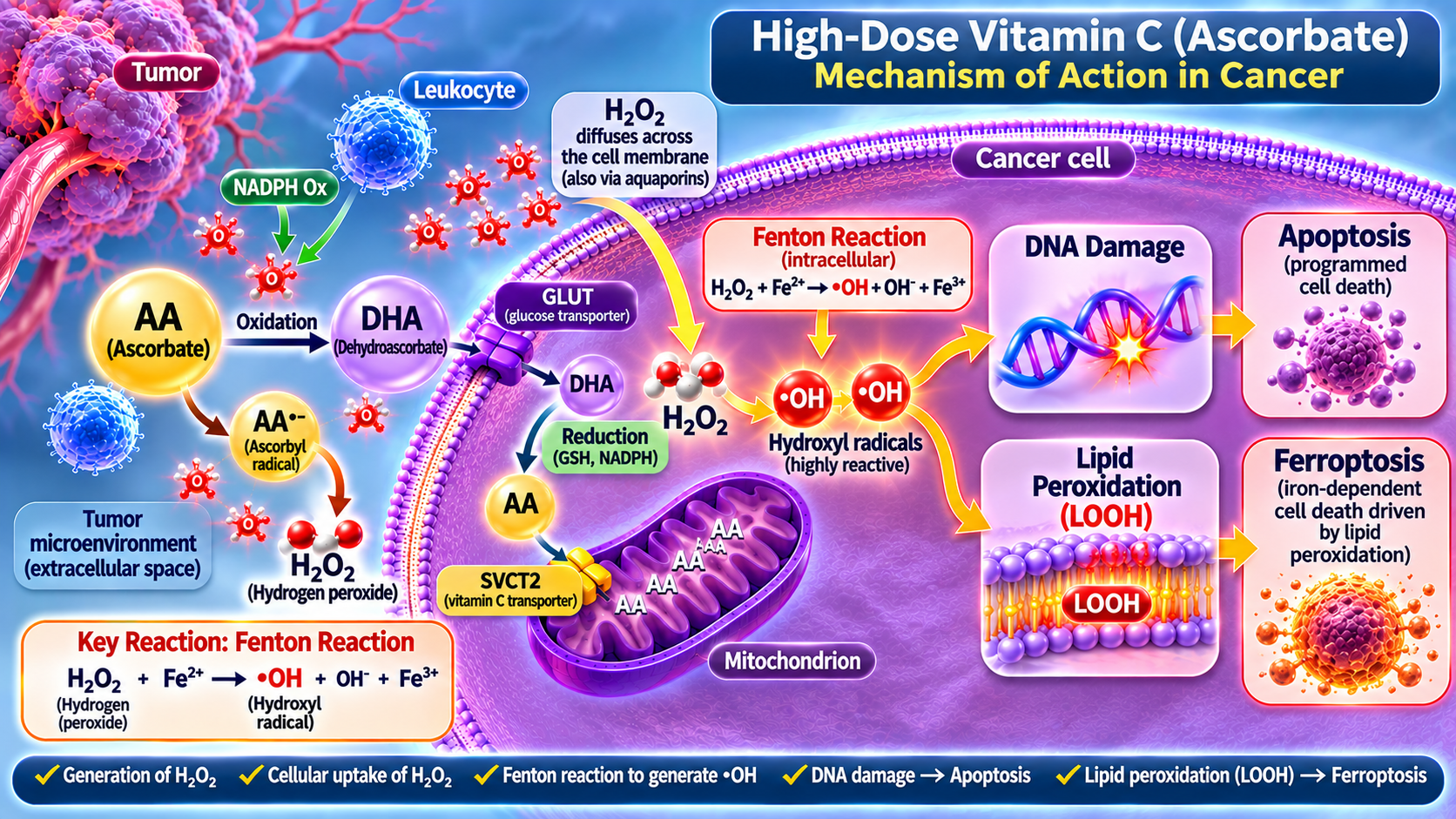
At pharmacological concentrations, ascorbate can undergo oxidation in the extracellular environment, generating hydrogen peroxide.
Hydrogen peroxide can enter cancer cells and, particularly in the presence of intracellular redox-active iron, generate highly reactive hydroxyl radicals. When oxidative stress exceeds the antioxidant defense capacity of cancer cells, it may result in:
- DNA damage and DNA strand breaks.
- Mitochondrial dysfunction and ATP depletion.
- Lipid peroxidation and cellular membrane damage.
- Protein oxidation and loss of protein function.
- Disruption of cellular energy metabolism.
- Activation of cell death pathways, including apoptosis and necrosis.
Differences in antioxidant defense capacity, iron metabolism, and hydrogen peroxide clearance may contribute to the differential sensitivity of cancer cells and normal cells to pharmacological ascorbate.
These mechanisms may vary according to cancer type, molecular characteristics, and the metabolic environment of the tumor. Many of these findings originate from laboratory research and have not been fully validated in clinical studies.
Clinical Evidence: Beyond Laboratory Research
High-dose intravenous vitamin C has progressed from laboratory investigations to prospective clinical trials, including randomized studies evaluating its combination with conventional chemotherapy.
Clinical research has provided encouraging findings in selected cancer types, particularly pancreatic cancer, RAS-mutated colorectal cancer, and ovarian cancer. However, clinical benefits are not uniform across all cancers or treatment regimens.
Pancreatic Cancer
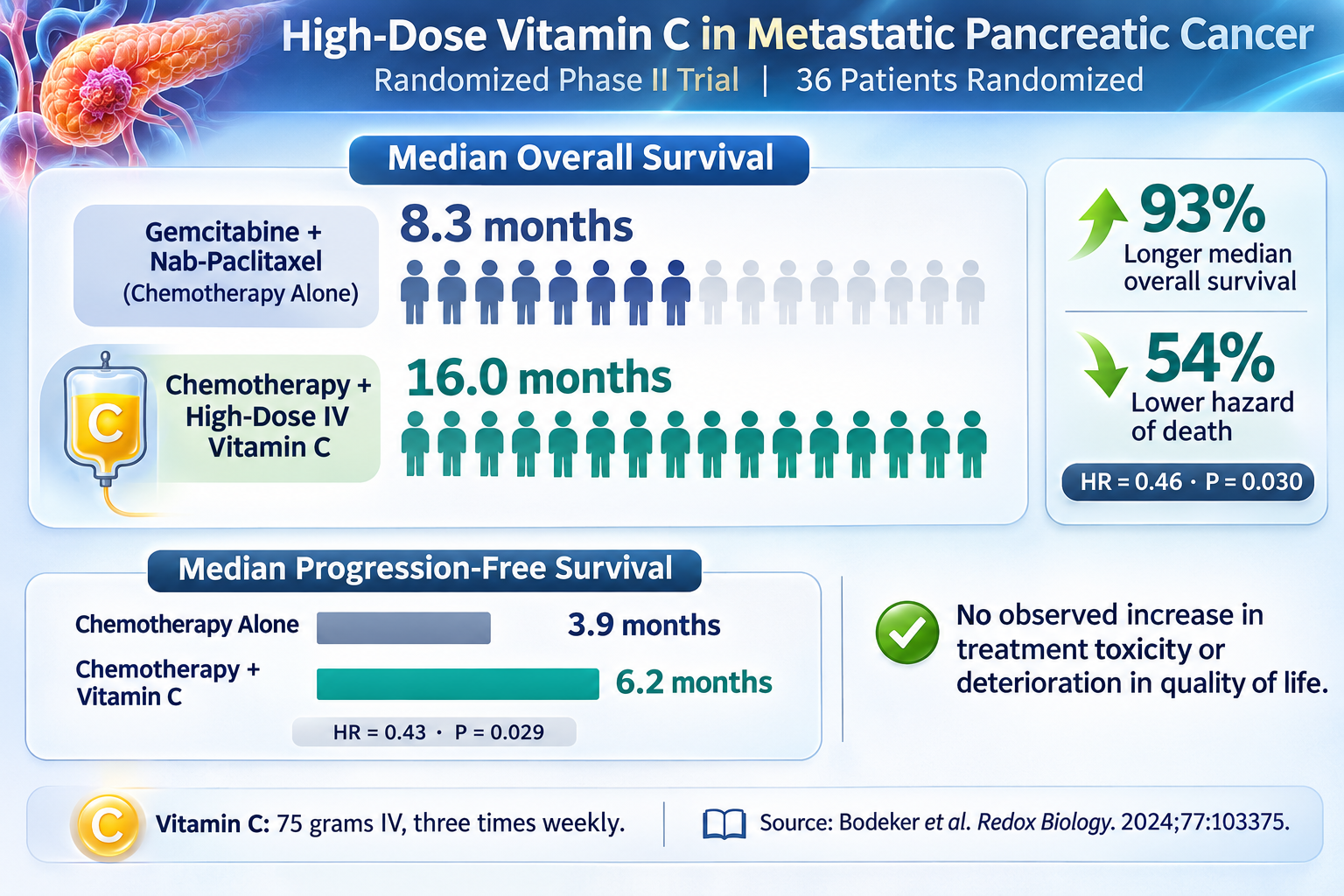
A randomized Phase II clinical trial published in Redox Biology in 2024 evaluated high-dose intravenous vitamin C in combination with gemcitabine and nab-paclitaxel in patients with metastatic pancreatic cancer.⁶
The study randomized 36 patients. Patients assigned to vitamin C received 75 grams of intravenous vitamin C three times per week in addition to standard chemotherapy.
The study reported:
- Median overall survival: 16 months versus 8.3 months.
- A 93% increase in median overall survival.
- A 54% reduction in the hazard of death (HR = 0.46).
- Median progression-free survival: 6.2 months versus 3.9 months.
- No observed increase in treatment-related toxicity.
- No deterioration in quality of life attributable to vitamin C.
The addition of high-dose intravenous vitamin C nearly doubled median overall survival in this study without increasing treatment-related toxicity.
Although this was a relatively small randomized trial, the findings provide encouraging clinical evidence supporting further investigation of high-dose vitamin C in pancreatic cancer. Larger randomized clinical trials are needed to confirm these findings.
Colorectal Cancer and RAS Mutations
The randomized Phase III VITALITY study evaluated high-dose intravenous vitamin C in combination with conventional chemotherapy in patients with metastatic colorectal cancer.⁷
Although the study did not meet its primary endpoint in the overall patient population, patients with RAS-mutated colorectal cancer demonstrated a progression-free survival benefit in a subgroup analysis.
These findings suggest that the molecular characteristics of cancer may influence its sensitivity to high-dose vitamin C.
Ovarian Cancer
A randomized Phase I/IIa clinical trial conducted at the University of Kansas Medical Center and published in Science Translational Medicine in 2014 evaluated high-dose intravenous vitamin C in combination with carboplatin and paclitaxel in patients with newly diagnosed stage III or IV ovarian cancer.⁸
The study enrolled 27 patients. Patients assigned to vitamin C received 75 or 100 grams twice weekly for 12 months, including six months of concurrent chemotherapy.
The study reported:
- Median time to disease progression or recurrence: 25.5 months versus 16.75 months.
- An improvement of 8.75 months in median time to progression or recurrence, although the difference was not statistically significant.
- A trend toward improved overall survival.
- Reductions in mild and moderate chemotherapy-related side effects.
- No significant increase in severe chemotherapy-related toxicity.
The accompanying laboratory studies demonstrated that pharmacological vitamin C enhanced ovarian cancer cell sensitivity to carboplatin and paclitaxel.
Although the clinical trial was too small to establish a survival benefit, these findings support further investigation of high-dose intravenous vitamin C as a complementary approach to enhancing chemotherapy effectiveness and improving treatment tolerance.
Our Bifocal Oncology Approach
We evaluate the potential application of high-dose vitamin C through two complementary biological perspectives.
The first perspective considers the unique molecular characteristics of each patient’s cancer, including KRAS mutations, alterations in TET enzymes such as TET2 mutations, and associated metabolic and epigenetic vulnerabilities that may influence sensitivity to vitamin C.
The second perspective considers biological characteristics shared across many cancer types, including abnormal energy metabolism, oxidative stress, and altered cellular antioxidant defense mechanisms.
By understanding both perspectives, we explore opportunities to incorporate high-dose vitamin C into a comprehensive, multi-target cancer treatment strategy.
Combining Vitamin C With Cancer Treatments
We primarily incorporate high-dose intravenous vitamin C into cancer treatment programs to explore opportunities to:
- Enhance cancer cell sensitivity to chemotherapy.
- Target metabolic vulnerabilities in cancer cells.
- Improve treatment tolerance.
- Maintain physical performance and quality of life.
- Potentially prolong disease control and survival.
Our preferred approach is to integrate intravenous vitamin C with appropriate cancer treatments rather than administer it as an isolated anticancer therapy.
We carefully evaluate the compatibility of intravenous vitamin C with each patient’s chemotherapy, targeted therapy, immunotherapy, and other medications.
Our High-Dose Vitamin C Program
At Omega Precision Oncology, we offer three principal intravenous vitamin C doses:
- 50 grams.
- 75 grams.
- 100 grams.
The appropriate dose is determined by the patient’s cancer type, treatment regimen, kidney function, overall clinical condition, and treatment tolerance.
Our preferred initial treatment schedule is three infusions per week for 8 to 12 weeks, followed by reassessment.
For patients who live outside the Houston area or have difficulty attending frequent appointments, we may consider modified treatment schedules, including weekly infusions. However, the clinical benefits of less frequent administration have not been established to the same extent as the schedules evaluated in clinical trials.
Treatment duration and frequency are individualized according to disease status, treatment response, and clinical objectives.
Safety Evaluation and Monitoring
Before initiating high-dose intravenous vitamin C, we evaluate each patient’s medical history, current medications, laboratory findings, and potential risk factors.
Our safety evaluation includes:
- Glucose-6-phosphate dehydrogenase (G6PD) testing.
- Kidney function assessment.
- History of kidney stones and oxalate-related kidney disease.
- Fluid and electrolyte status.
- Evaluation of potential interactions with ongoing cancer treatments.
Patients with G6PD deficiency are not candidates for high-dose intravenous vitamin C because of the risk of hemolysis.
We also recognize that high-dose intravenous vitamin C may interfere with certain point-of-care blood glucose measurements. Appropriate precautions are necessary, particularly for patients with diabetes.
Patients are monitored throughout their treatment program, and doses and schedules are adjusted when clinically appropriate.
Do We Recommend Vitamin C for Cancer Prevention?
We do not routinely recommend high-dose intravenous vitamin C for cancer prevention or for preventing cancer recurrence in patients who have achieved complete remission.
Our current program primarily focuses on patients with active cancer, particularly those receiving chemotherapy or other anticancer treatments.
There is currently insufficient clinical evidence to support routine high-dose intravenous vitamin C as a preventive treatment.
Science-Guided Integration of Vitamin C
High-dose intravenous vitamin C represents an opportunity to explore the therapeutic properties of a familiar natural compound through modern cancer biology and pharmacology.
We recognize both its potential and its limitations. Although randomized clinical trials have demonstrated encouraging results in selected clinical settings, high-dose intravenous vitamin C is not FDA-approved as a cancer treatment, and its effectiveness has not been established across all cancer types.
Our goal is to identify patients who may benefit from this complementary treatment and incorporate it into a scientifically informed, individualized cancer treatment plan.
References
- Cameron E, Pauling L. Supplemental ascorbate in the supportive treatment of cancer: prolongation of survival times in terminal human cancer. Proc Natl Acad Sci U S A. 1976;73(10):3685-3689. doi:10.1073/pnas.73.10.3685. https://pubmed.ncbi.nlm.nih.gov/1068480/
- Vera JC, Rivas CI, Fischbarg J, Golde DW. Mammalian facilitative hexose transporters mediate the transport of dehydroascorbic acid. Nature. 1993;364(6432):79-82. doi:10.1038/364079a0. https://pubmed.ncbi.nlm.nih.gov/8316303/
- Vera JC, Rivas CI, Zhang RH, Farber CM, Golde DW. Human HL-60 myeloid leukemia cells transport dehydroascorbic acid via the glucose transporters and accumulate reduced ascorbic acid. Blood. 1994;84(5):1628-1634. doi:10.1182/blood.V84.5.1628.1628. https://pubmed.ncbi.nlm.nih.gov/8068952/
- Agus DB, Vera JC, Golde DW. Stromal cell oxidation: a mechanism by which tumors obtain vitamin C. Cancer Res. 1999;59(18):4555-4558. https://pubmed.ncbi.nlm.nih.gov/10493506/
- Chen Q, Espey MG, Krishna MC, et al. Pharmacologic ascorbic acid concentrations selectively kill cancer cells: action as a pro-drug to deliver hydrogen peroxide to tissues. Proc Natl Acad Sci U S A. 2005;102(38):13604-13609. doi:10.1073/pnas.0506390102. https://pubmed.ncbi.nlm.nih.gov/16157892/
- Bodeker KL, Smith BJ, Berg DJ, et al. A randomized trial of pharmacological ascorbate, gemcitabine, and nab-paclitaxel for metastatic pancreatic cancer. Redox Biol. 2024;77:103375. doi:10.1016/j.redox.2024.103375. https://pubmed.ncbi.nlm.nih.gov/39369582/
- Wang F, et al. A randomized, open-label, multicenter, phase 3 study of high-dose vitamin C plus FOLFOX ± bevacizumab versus FOLFOX ± bevacizumab in unresectable untreated metastatic colorectal cancer (VITALITY study). Clin Cancer Res. 2022;28(19):4232-4239. https://aacrjournals.org/clincancerres/article/28/19/4232/709305/A-Randomized-Open-Label-Multicenter-Phase-3-Study
- Ma Y, Chapman J, Levine M, Polireddy K, Drisko J, Chen Q. High-dose parenteral ascorbate enhanced chemosensitivity of ovarian cancer and reduced toxicity of chemotherapy. Sci Transl Med. 2014;6(222):222ra18. doi:10.1126/scitranslmed.3007154. https://pubmed.ncbi.nlm.nih.gov/24500406/